 By Saurav Mehra
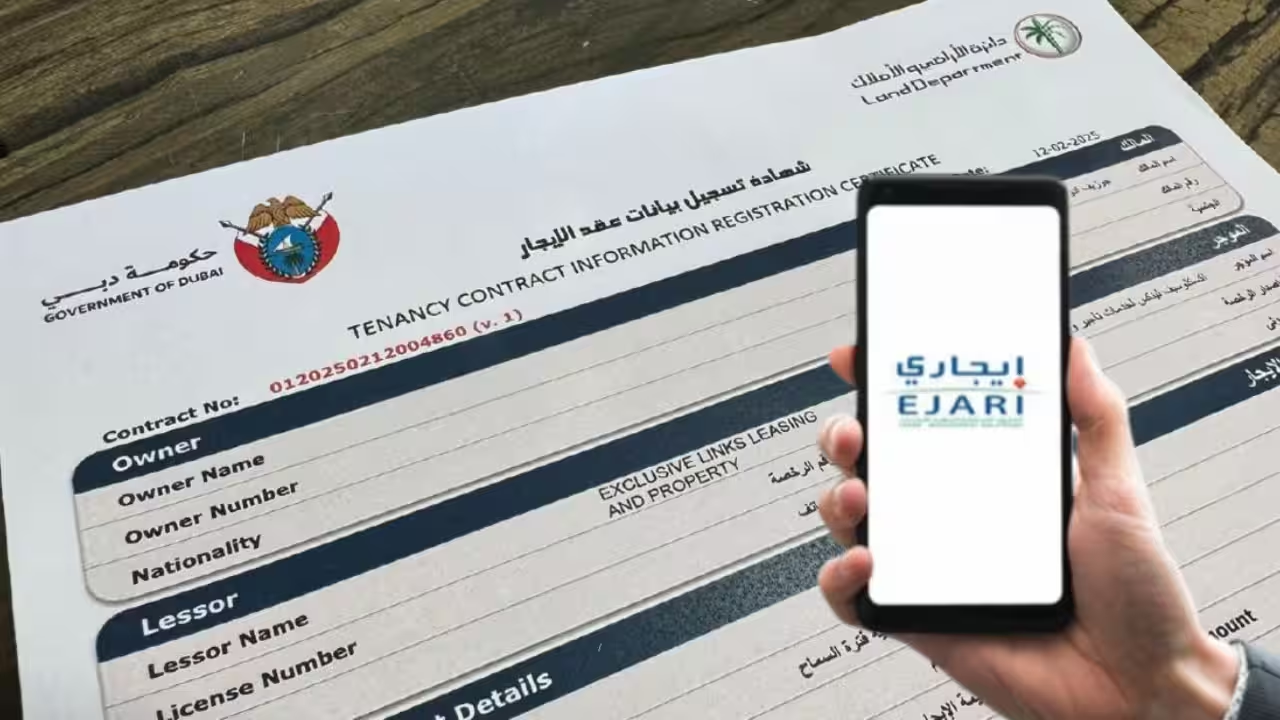
 Ejari (Arabic for “my rent”) is Dubai’s official tenancy contract registration system, operated by the Real Estate Regulatory Agency (RERA) under the Dubai Land Department (DLD). Registering your lease produces an Ejari certificate with a unique contract number, which serves as official proof of your tenancy. For tenants, it’s far more than paperwork: without it, a rental contract has little legal standing, and several essential services in Dubai simply won’t work.
What Ejari Actually Does
- It creates an official, government-recognized record of your tenancy contract, covering both residential and commercial leases.
- Every tenancy agreement in Dubai is required to be registered, and one source cites Dubai Law No. 26 of 2007 (as amended) as requiring registration within 14 days of the contract being signed.
- A property can only have one active Ejari registration at a time, so a previous tenant’s registration must be cancelled before a new tenant can register.
- The system supports digital registration, renewal, and updates when lease terms change, which keeps the record current for both tenants and landlords.
Why It Matters for Tenants
The importance of Ejari becomes clear when you see how many everyday processes depend on it.
- Activating DEWA utilities. The Dubai Electricity and Water Authority requires a valid Ejari certificate to open or transfer an electricity and water account in your name. Without Ejari, you can’t get connected.
- Residency visas. The immigration authority (GDRFA) typically requires Ejari for residence visa renewals and for new visa applications when sponsoring family members, since it proves you have accommodation.
- Updating your Emirates ID address. Your registered tenancy is what supports changing the address linked to your Emirates ID.
- Legal protection in disputes. Without a registered Ejari, you generally can’t file a case at the Rental Disputes Settlement Centre, and your contract has no standing for protection under RERA’s rental laws. This applies to both tenants and landlords.
- Banking, internet, and school enrolment. Ejari is commonly accepted as proof of address for opening bank accounts, setting up internet and telecom services, and enrolling children in school.
- Business licensing. For commercial tenants, a valid Ejari is needed to license a business at the premises.
The practical consequence is worth stating plainly: skipping Ejari saves you a small registration fee but can leave you without utilities, delay a visa renewal, and strip away your access to formal dispute resolution.
Who Is Responsible for Registering?
- Residential tenants usually initiate registration, since they’re the ones who most urgently need the certificate for DEWA and visa purposes. Who bears the fee is negotiable and should be clarified in the lease.
- Landlords share the legal obligation. Some sources note landlords can face fines (figures around AED 5,000 are cited) for failing to register, and a landlord can’t file a case at the Rental Dispute Centre without a registered contract.
- Many tenants simply register it themselves when a landlord is slow, because the certificate is needed so urgently.
What You Need to Register
Typical documents include:
- Emirates ID (for tenant and, where required, landlord)
- Passport copy
- The signed tenancy contract
- The property’s title deed
- The DEWA premise number
If you’re renewing an Ejari, a recent DEWA bill is also commonly requested.
How to Register
- Online through the Dubai REST app or the DLD website is the fastest route, with registration typically taking around 15 to 30 minutes. You select the Ejari service, upload your documents, pay the fee, and receive the certificate as a digital document.
- In person at an approved RERA typing centre, which can register on your behalf for an additional service charge.
Ejari Costs
Published fee figures vary noticeably between sources, reflecting different fee bundles and channels, so confirm the current amount directly on the Dubai REST app or DLD website before paying.
- Online registration is cited in the range of roughly AED 155 to AED 220, with one detailed 2026 breakdown showing AED 177.75 (AED 100 registration, AED 10 knowledge fee, AED 10 innovation fee, AED 55 service-partner fee, and VAT).
- Typing centres add a service charge, commonly AED 20 to AED 100, on top of the government fee.
- Renewal costs the same as new registration, and cancellation is generally free or minimal.
- Ejari must be renewed annually along with your lease, so keep it in step with your tenancy renewal.
Ejari and DEWA: How They Connect
Once your Ejari is registered, DEWA sends a payment link to the registered tenant’s email. Activation typically involves a refundable security deposit and an activation fee, which vary depending on property type. The Ejari certificate is what links your tenancy to the utility account, so getting it first prevents delays when you’re trying to move in.
Frequently Asked Questions
Q1. Is Ejari registration really mandatory, or can I skip it if my landlord doesn’t ask?
A. It’s required for every Dubai tenancy, and skipping it carries real consequences. You may face difficulties activating DEWA, completing certain visa-related procedures, and accessing the Rental Disputes Settlement Centre if a problem arises with your landlord.
Q2. Who pays the Ejari fee, the tenant or the landlord?
A. This is negotiable and should be settled in the lease. In practice, tenants often pay because they need the certificate, though what matters is that the registration is completed rather than which party covers the cost.
Q3. Do I need to renew Ejari every year?
A. Yes. Ejari needs to be renewed when your tenancy contract is renewed, typically annually, so it’s worth completing the renewal promptly each time you renew your lease.
Q4. Can I register Ejari myself without a real estate agent or typing centre?
A. Yes. You can register Ejari online through the Dubai REST app or DLD’s online services by uploading the required documents and paying the applicable fee, avoiding the need to use a typing centre.